
Natural Resources, The Environment and the Constitutional Review Committee’s Recommendations: Why Government Should Reconsider Its Position
The article critiques the Government of Ghana’s rejection of proposed constitutional reforms on natural resource governance and environmental protection. It advocates stronger constitutional safeguards for public trusteeship, sustainability, intergenerational equity, community benefits, and environmental rights.
Read article →Featured Posts

Evaluation of the Efficacy of the Corporate Insolvency and Restructuring Act 2020 (Act 1015) of Ghana: A Comparative Analysis with the Insolvency Legal Framework of the United Kingdom (Part I)

When the Machine Knows the Law: Artificial Intelligence, Superintelligence and the Future of Lawyers and Judges in Ghana

Legal Vacation Without ‘Vacation.’; The Plight of ‘ORAL ’ Lawyers and the Infringed Rights of the Accused?

Ghana Cannot Arrest Its Way Out of Galamsey - A Case for Medium Scale Mining Revolution
Most Recent

When the Clock Trumps the Merits: A Critical Examination of the Supreme Court's Decision In Ex Parte Nyindam and Its Implications for Democratic Governance

Of Section 315 (3) of the Criminal and Other Offences (Procedure) Act, 1960 (Act 30); Review of the Decision Of Augustine Yeboah vrs. Attorney-General, Dictum of Parker Yarney J.

Conviction and Sentence in Absentia; Effective Date Of Sentence, Settling The Uncertainty; The Case Of Sedina Tamakloe-Attionu, Former Masloc CEO

Intestate Succession in Ghana: How PNDCL 111 Shapes Families After Death
Lawyers
- Lawyers
Legal Vacation Without ‘Vacation.’; The Plight of ‘ORAL ’ Lawyers and the Infringed Rights of the Accused?
The article examines the controversy over substantive criminal trials continuing during Ghana’s legal vacation, particularly where defence lawyers have indicated that they are unavailable. It argues that although the Chief Justice has authority to constitute vacation courts, exercising that power must be balanced against established court practice and an accused person’s constitutional rights to counsel, adequate preparation and a fair trial.
- Lawyers
Ghana Cannot Arrest Its Way Out of Galamsey - A Case for Medium Scale Mining Revolution
The article argues that Ghana cannot eliminate illegal mining through arrests and military operations alone because these measures fail to address the economic and regulatory factors sustaining galamsey. It proposes a medium-scale mining framework that formalises local mining cooperatives, expands access to finance and technology, and imposes stronger environmental and corporate accountability.
- Lawyers
When the Clock Trumps the Merits: A Critical Examination of the Supreme Court's Decision In Ex Parte Nyindam and Its Implications for Democratic Governance
The article critiques the Supreme Court’s decision in Ex parte Mathew Nyindam, which quashed the Kpandai election-petition judgment because the petition was filed outside the mandatory 21-day statutory period. It argues that the Court elevated procedural timelines above substantive electoral justice, constitutional jurisdiction, legitimate expectation and the merits of documented electoral irregularities.
- Lawyers
Of Section 315 (3) of the Criminal and Other Offences (Procedure) Act, 1960 (Act 30); Review of the Decision Of Augustine Yeboah vrs. Attorney-General, Dictum of Parker Yarney J.
The article reviews Augustine Yeboah v Attorney-General and examines when a prison sentence begins where a convicted person absconds before serving the sentence. It argues that the period spent at large must not count towards the sentence and supports issuing a new warrant of commitment upon the convict’s rearrest. It further analyses the relationship between Act 30, Act 29 and the Courts Act, concluding that the law should not permit an absconding convict to benefit from unlawful conduct.
Judges
- Judges
Evaluation of the Efficacy of the Corporate Insolvency and Restructuring Act 2020 (Act 1015) of Ghana: A Comparative Analysis with the Insolvency Legal Framework of the United Kingdom (Part I)
The article examines Ghana’s Corporate Insolvency and Restructuring Act, 2020 (Act 1015), comparing its corporate rescue and insolvency mechanisms with those of the United Kingdom. It highlights Ghana’s progress towards a rescue-oriented framework while identifying gaps in restructuring flexibility, judicial specialization and institutional capacity.
- Judges
When the Machine Knows the Law: Artificial Intelligence, Superintelligence and the Future of Lawyers and Judges in Ghana
This article examines how artificial intelligence could transform Ghana’s legal profession and judiciary, particularly legal practice, employment, judicial decision-making and access to justice. It advocates responsible AI integration while preserving judicial independence, professional accountability and human control over judicial decisions.
- Judges
Navigating An Application For Letters Of Administration: A Practical Guide for the Lawyer and the Judge from First Instructions to the Final Administration of the Estate
The article provides a practical guide to applications for Letters of Administration in Ghana, covering the lawyer’s duties in investigating the deceased’s family, assets, liabilities and entitlement to administer the estate. It also explains the judge’s responsibility to verify jurisdiction, intestacy, beneficiaries, priority and the composition of the estate before making a grant.

- Judges
Does A Poisonous Mango Tree Necessarily Bear Poisoned Mangoes?: The “Fruit of the Poisonous Tree” Doctrine’s Applicability in Ghanaian Evidence Law
The article examines the “fruit of the poisonous tree” doctrine and how Ghanaian courts deal with evidence obtained through unlawful or unconstitutional means. It explains that, following Raphael Cubagee v Michael Yeboah Asare & Others, Ghana does not automatically exclude such evidence but applies a discretionary balancing approach. Pasted markdown Courts must consider factors such as the nature of the rights violation, seriousness of the breach, reliability of the evidence, public interest, fairness, and the integrity of the justice system.

Students
- Students
Ghana’s Legal Profession Is Entering the AI Era Without a Regulatory Framework
The article argues that Ghana’s legal ethics rules still provide a strong foundation, but they do not directly address the realities of AI-assisted legal practice. It concludes that the General Legal Council should clarify how existing duties like competence, diligence, confidentiality, and supervision apply when lawyers use AI tools.

- Students
Refined Justice for All
The article examines the Justice for All Programme at Kumasi Central Prison in 2025 as a practical justice-sector intervention that brings courts into prison settings to review remand cases, grant or vary bail, and reduce prolonged pre-trial detention. It argues that while the programme has significantly improved access to justice and reduced remand populations, lasting reform requires stronger legal education, improved legal aid, and more realistic bail practices for inmates.

- Students
From Aspiration to Action: The Urgent Call to Enforce Ghana’s Socio-Economic Rights Historical context and international backgrounds
This article examines the legal and constitutional debate in Ghana over the justiciability of economic, social, and cultural rights under Chapter 6 of the 1992 Constitution. It argues that making these rights enforceable is essential to fulfilling Ghana's democratic aspirations and international obligations.

- Students
The Judicial Powers of the Judicial Committee of a Traditional Council
This article examines the judicial powers of the Judicial Committee of a Traditional Council in Ghana, outlining its composition, jurisdiction, appointment process, and adjudicatory functions in chieftaincy disputes. It also discusses appeal procedures, enforcement of decisions, and statutory limitations on the Committee's authority.

Academics
- Academics
Assessing The “MahamaCare” Policy: A Mirage or a Reality Towards Achieving a Universal Access to Healthcare in Ghana
The article critically evaluates Ghana’s new “MahamaCares” health policy, exploring its potential to address chronic non-communicable diseases and achieve universal healthcare access. While well-intentioned, the policy's operational gaps, data limitations, and financial risks may undermine its success.

- Academics
GTEC's Authority to Regulate Academic Titles: A Legal Necessity, Not an Overreach
GTEC’s enforcement of regulations on academic titles is a legally sanctioned effort to uphold academic integrity and protect public trust, not a political overreach. The directive aligns with national laws and mirrors practices in other regulated professions.

- Academics
Governance beyond the Cross
This article explores how Easter's spiritual lessons, particularly the leadership model of Christ, offer timeless governance principles—such as clarity of vision, diversity, transparency, and transformative leadership—essential for building resilient and accountable institutions today.

- Academics
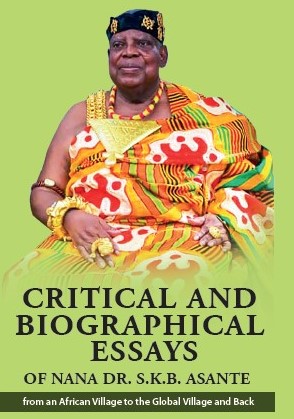
Book review: The treasures in “Critical And Biographical Essays Of Nana S.K.B. Asante"
This write-up unveils the treasures in “Critical And Biographical Essays Of Nana S.K.B. Asante: From An African Village To The Global Village And Back”, with the hope of inspiring greater reading of the book and conversation on the many ideas espoused in the book.
Based on
Category
Browse some of the most popular content across the Dennislaw library.